Future-Focused Branding

Future-Focused Branding is our methodology for building brands as adaptive systems rather than fixed identities. It's built for companies changing fast, funded founders building for the next stage of growth, and marketing leaders bringing an inherited brand back to life, where the brand needs to keep pace with the business rather than hold it back.
Most brands are built once and start ageing immediately. This is how we build ones that don't.
A brand built to stay still can't keep up with a business that won't.
Companies change shape faster than they used to. The brand shouldn't have to be rebuilt every time they do.

The Methodology

Future-Focused Branding works on three levels: a cycle that describes how a brand lives, a framework that gives it structure, and a set of principles that sit underneath both.
explore services

The Brand Cycle

This cycle describes how a brand lives,.,
read more

The Brand Sphere

This framework provides the brand structure.
read more

The Brand Principles

The principles sit underneath every brand.
read more

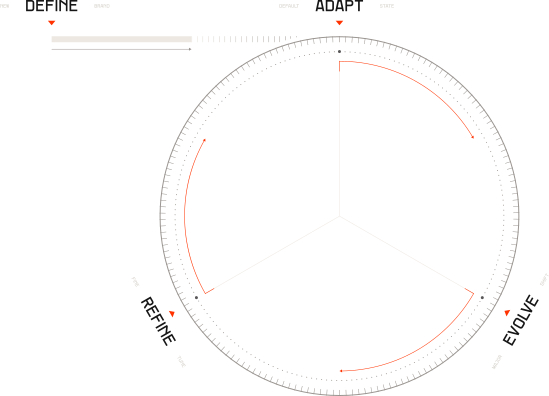
The Brand Cycle

A brand built this way isn't a fixed artefact. It moves between four states over its life, and a healthy one spends most of its time in just one of them.

Define

Where the brand is built. Strategy, story, and the system everything grows from. Done properly, you return here rarely.

Adapt

Where a healthy brand lives. Small, deliberate adjustments as the business grows, new audiences, products, and markets absorbed into the existing system rather than bolted on.

Evolve

The larger shift, when several parts of the brand need to change at once. A future-focused brand reaches this point far less often, because adaptation handles most of what would otherwise force a rebrand.

Refine

Tightening and sharpening what already works, rather than rethinking it.

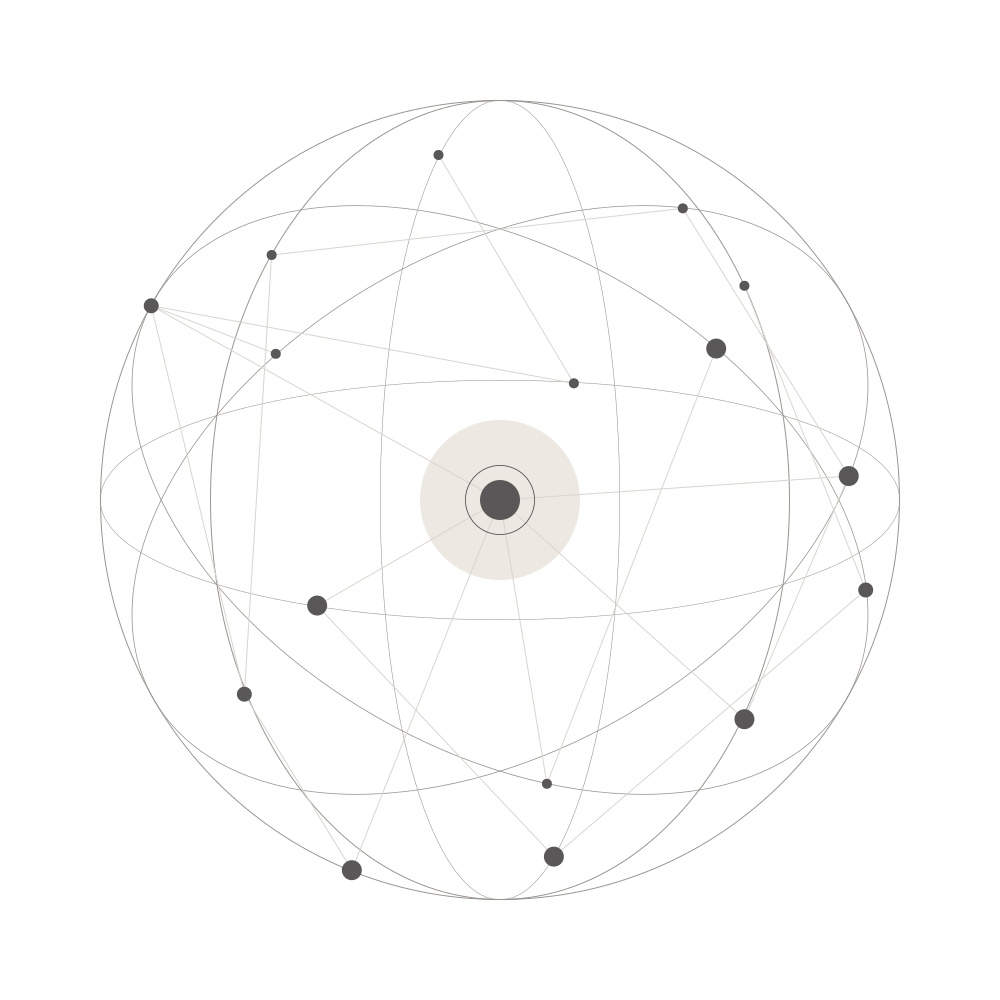
The Brand Sphere

The Brand Cycle describes how a brand behaves. The Brand Sphere is the framework that makes that behaviour possible.

It maps a brand across a set of connected dimensions, the strategic, verbal, visual, and experiential parts that together make a brand whole. Each dimension holds its own Elements, the individual components you build and maintain, and Connections, the relationships between them that keep the system coherent as any one part changes.

It's what lets a brand adapt without coming apart. Change an Element, and the Connections hold the rest in place. This is the structure we work through with you, dimension by dimension, when we build or rebuild a brand.
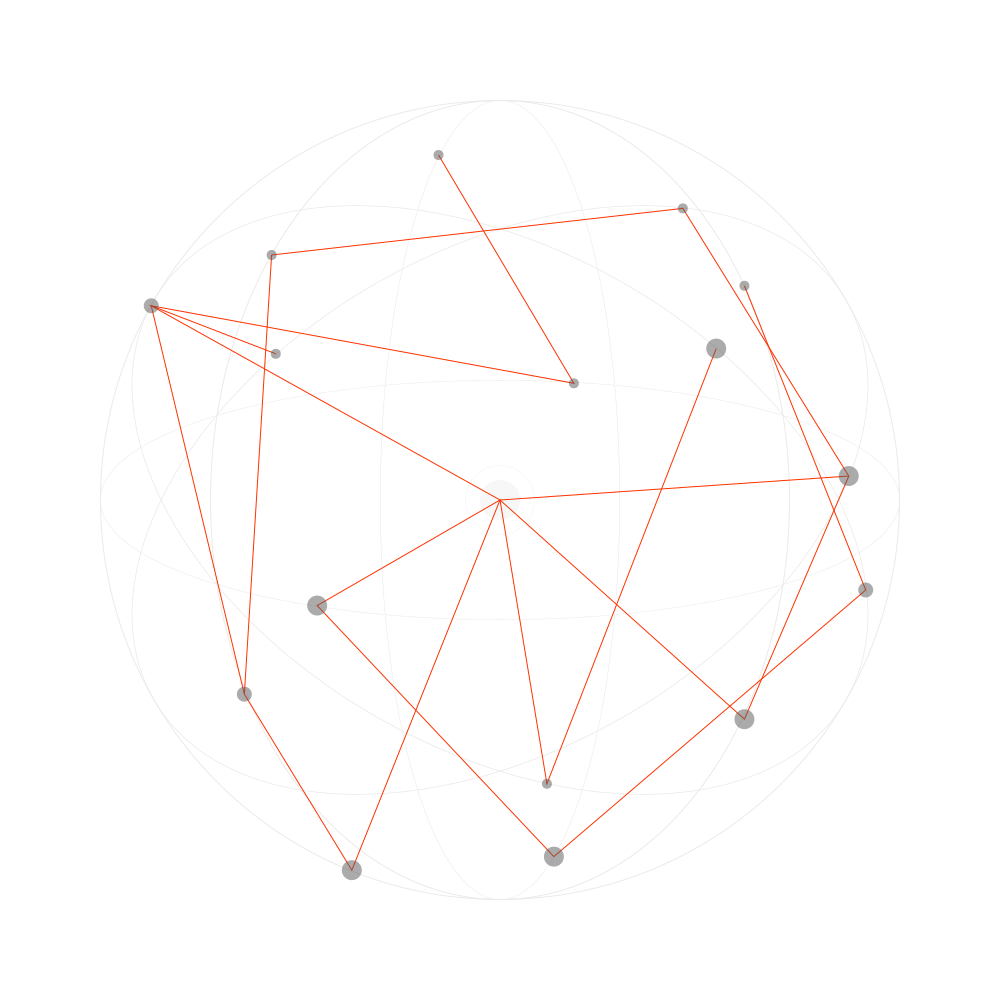
The Brand Sphere is a three-dimensional structure with a recognisable form that holds together while its contents move. Not a hierarchy, not protective layers, but a system of relationships.
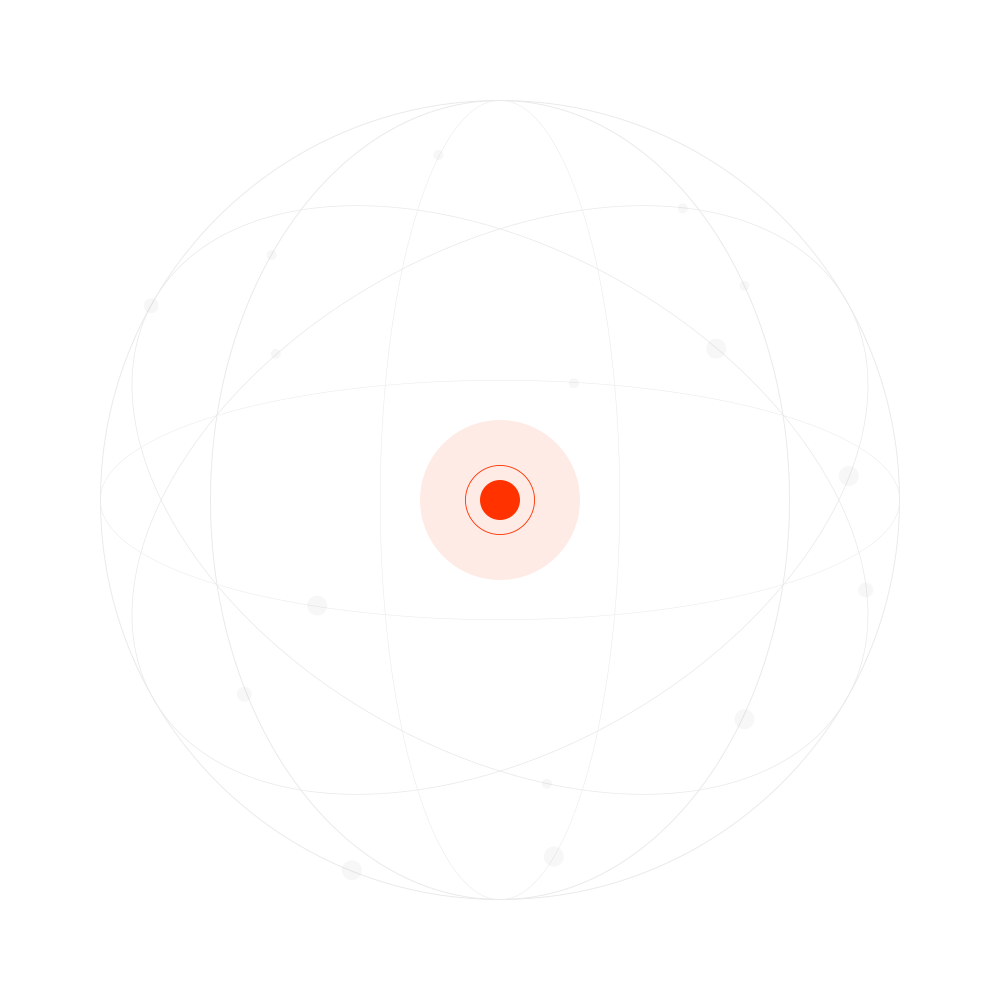
The core is the dense, load-bearing centre, usually anchored by foundation. A strong core lets the rest of the sphere flex without losing its shape.
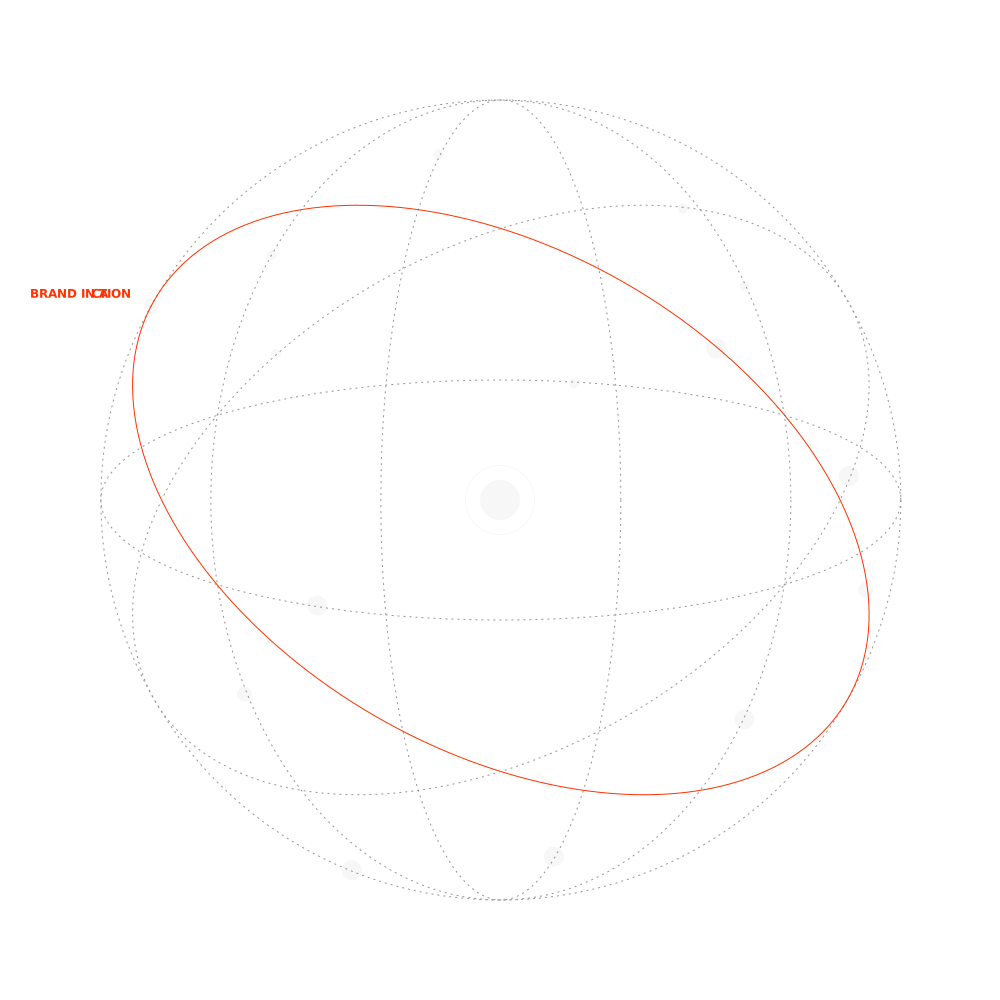
dimensions are the structural skeleton, the eleven broad areas every brand must cover, from foundation through to brand in action. Each dimension is a structural axis through the sphere.
elements are the granular components that live within each dimension, welded to its axis. Nearer elements read larger, farther ones smaller, the way a real sphere would.
connections are the relationships between elements, often crossing from one dimension to another. This is what makes the sphere a system rather than a list, where most adapting happens.

The Brand Principles

The methodology comes from a few firm convictions about how brands should work.

A brand is a system, not an artefact. It should be built to absorb change, not resist it. Coherence matters more than consistency: the goal isn't a brand that never changes, it's one that changes without losing itself. And the work is never finished, because the business it belongs to is never finished either.

Evolution-Readiness

Evolution-Readiness is the brand's capacity to change without breaking. A brand is evolution-ready when its components can be refined, replaced, or extended without forcing a rebuild of everything around them.

Modularity

Modularity is the discipline of building a brand from coherent, recombinable parts rather than as a single integrated artefact. A modular brand is composed of distinct elements; each with a clear purpose, interface to other elements, and the ability to be refined, replaced, or recombined without forcing rebuilds elsewhere.

Adaptability

Adaptability is the brand's capacity to flex within its existing form to show up correctly across different contexts, audiences, channels, and moments without losing identity or requiring rebuilding.

Scalability

Scalability is the discipline of building brand elements with headroom; building for today in a way that has the room to grow, contract, or extend into territory the business hasn't yet reached.

Platform-Agnostic

Platform-Agnosticism is the discipline of building a brand without structural dependencies on any specific platform, channel, format, medium, or technology. A platform-agnostic brand uses platforms but isn't defined by them.

Why we built it this way

Traditional branding was built for a world that changed more slowly. A brand could be set once and stay more or less right for years.

That world is gone. Funding rounds, new products, new markets, and shifting audiences now arrive in months, not decades. The traditional response is to rebrand each time the gap grows too wide, which is expensive, disruptive, and tends to alienate the audience that already knew you. Future-Focused Branding exists to break that cycle: build the brand to adapt, and the rebrands you'd otherwise need mostly stop being necessary.

Future-Focused Branding compared to the traditional approach

The difference isn't quality of work. It's what happens to the brand as the business moves.

Traditional Branding

Future-Focused Branding

Brand Guidelines
A fixed document, out of date once the company moves
A living system that stays current as you grow
Design Approach
Consistent until it needs redoing
Modular, so new needs slot into what's already there
Audience Understanding
Fixed demographic segments
Dynamic personas that move with your market
Technology
Built for today’s platforms
Platform-agnostic, ready for what comes next
Positioning
Pinned to today’s competitors
Built to anticipate where the market is heading
Growth
Rebuilt at each funding stage
One system that scales across every stage
Risk
A rebrand each time the brand breaks
Evolution planned for, so it rarely breaks
Measurement
Backward-looking metrics
Forward-looking, predictive
Brand Equity
Slow and incremental
Compounding, because you’re not starting over
Traditional branding is static and fixed. Future-Focused Branding is adaptive and built to grow.

What it comes down to

A traditional brand is accurate the day it's signed off and ageing the day after. A future-focused brand has change built in, so it shifts with new audiences, products, and funding stages without starting over. Most of its life is spent making small, deliberate adjustments rather than facing another rebrand.
see how we put it into practice

Fewer rebrands

A brand built to adapt absorbs change instead of breaking under it, so the expensive rebuild every few years mostly stops being necessary.

A brand that scales with you

From seed to Series B and beyond, the brand holds up as the company grows, no complete rebuild at each stage.

A brand the whole team can use

Built to be accessible and used, not locked in a document no one opens. The brand stays alive because everyone can reach it.

Questions about the methodology

Traditional branding builds a brand for the moment it launches and treats change as something to manage later, usually through a rebrand. Future-Focused Branding builds change into the brand from the start, so the brand evolves continuously instead of being periodically torn down and rebuilt.

No, it's closer to the opposite. The aim is to reduce how often a brand needs rebranding, by building it to adapt to change rather than break under it. A rebrand is a one-off event; Future-Focused Branding is an ongoing way of running a brand.

Future-Focused Branding is HRZN's approach to building a brand as an adaptive system rather than a fixed identity. The brand is designed to absorb change as the business grows, so it can shift with new audiences, products, and funding stages without an expensive rebrand each time.

The Brand Cycle describes the four states a brand moves between over its life: Define, Adapt, Evolve, and Refine. A healthy brand spends most of its time in Adapt, making small adjustments as the business grows, and only rarely needs the larger change of an Evolve.

Future-Focused Branding built for companies growing and changing quickly, particularly funded startups and scale-ups. It suits founders building a brand for the next stage of growth, and marketing leaders who have inherited a brand that no longer fits the company it represents.

See where your brand stands

Curious how your brand measures up as an adaptive system? Get a free read in under fifteen minutes with Inzo, our AI brand companion. An honest look at where your brand is strong and where it's drifting, with no cost and no call required.
take a free brand assessment
Ready to build a brand that grows with you? Let's talk.